
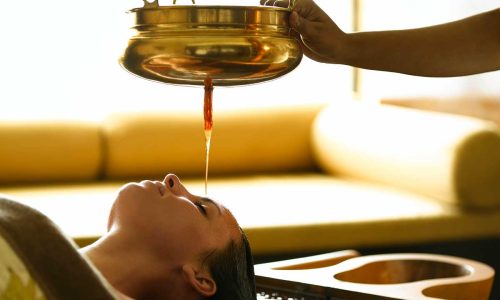
Shirodhara Therapy


Shirodhara in Ayurveda: Dosha Balancing
- Overthinking: Calms excessive mental activity and supports mental clarity.
- Anger & irritability: Soothes emotional imbalances related to aggravated Pitta.
- Anxiety: Deeply relaxes the nervous system, easing Vata-related stress and tension.
- Skin issues linked to stress: Helps reduce psychosomatic skin conditions aggravated by anxiety or tension.

Who Should Take Shirodhara?
- Busy professionals: For those facing high stress, decision fatigue, and mental overload.
- Students: Especially beneficial during exam time to improve focus and reduce anxiety.
- Burnout & fatigue: Ideal for individuals feeling mentally or emotionally drained.
- Hormonal mood swings: Helpful for women experiencing PMS, sleep disturbances, or menopausal imbalance.
Who Should Avoid Shirodhara?
- Cold, fever, or sinus infection: Shirodhara should be avoided during active infections or acute illnesses.
- Pregnancy: Not recommended unless specifically prescribed by an Ayurvedic physician.
- Open scalp wounds: Should be postponed until complete healing to prevent irritation or infection.
- Recent head or neck trauma: Avoid treatment if there's been any recent injury to these areas.
